Battle of Yiling
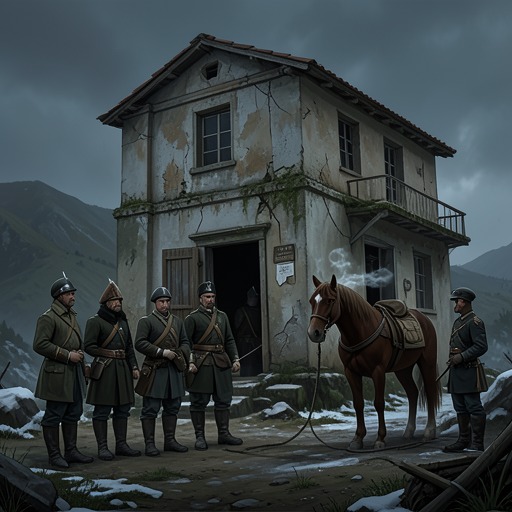
The Romance of the Three KingdomsThe Battle of Yiling is the catastrophic defeat that ended Xuande’s campaign against Sun Quan and turned a war of revenge into a rout. Lu Xun’s refusal to attack on his opponents’ timetable proved decisive: as Shu’s army spread into a long line of camps and its supplies became stretched, Wu waited for fatigue and disorder to take hold, then set the camps ablaze. Xuande escaped to Baidi with only a small remnant of his force; the army, its provisions, and many of its commanders were lost.
Causes and stakes
After taking the throne as the first ruler of Shu Han, Xuande declared that the oath made in the Peach Orchard obliged him to avenge Guan Yu’s death by attacking Sun Quan. Zhao Zilong objected that Cao Pi and Wei were the greater public enemy, while a campaign against Wu risked leaving Shu exposed to attack. Xuande rejected the distinction between private grief and public duty: to him, avenging Guan Yu was a sacred obligation. Despite protests, he marched in late summer of AD 221 with a combined force of 750,000 men.
The scale of Xuande’s commitment made the campaign dangerous as well as imposing. He established forty camps along a front stretching several hundred miles. Ma Liang warned him about the vulnerability created by the troop dispositions, and a map was sent to Kong Ming, who remained behind to guard against a possible Wei invasion. When Xuande later divided his forces between the north and south banks of the river, Huang Quan warned that the arrangement overstretched Shu’s resources and could make retreat perilous. Xuande dismissed the concern and took command of the southern bank himself.
Lu Xun holds the line
Sun Quan’s choice of Lu Xun, a young scholar rather than a celebrated warrior, was widely mocked by Wu’s military officers. The appointment was unpopular, but Sun Quan gave Lu Xun full battlefield authority. The campaign tested that authority: when commanders pressed him to rescue Sun Huan, trapped at Yiling, Lu Xun declined, insisting that the western army had to be defeated first. He also resisted the repeated demands of his generals to take the offensive.
Lu Xun understood that the season and the length of Shu’s supply routes favored patience. With summer heat upon them, he expected Xuande’s men to suffer from exhaustion and shortages. Even as Shu’s soldiers taunted the Wu forces, he kept his troops back. Xuande moved most of his army into the shelter of the woods, leaving 10,000 weaker troops on the plain and holding 8,000 men in reserve for an ambush. Lu Xun judged the apparent opportunity carefully: when his commanders urged an attack, he identified the movement in the distance as evidence of a trap and waited three days. Xuande then appeared with the ambush force, just as Lu Xun had predicted.
Before committing to the fire attack, Lu Xun tested the enemy’s readiness by sending an expeditionary force against a southern camp. The assault was beaten back, disappointing his commanders, but Lu Xun treated the result as useful information: Shu’s soldiers had grown careless about guarding their camps. He also saw that Kong Ming was absent from the front, leaving the army without the strategist Lu Xun believed would have recognized the plan.
The fire attack and rout
Lu Xun ordered Zhu Ran to advance upstream by boat. His instructions coordinated attacks on both shores: Zhu Ran’s boats were to carry straw, while Han Dang struck the northern bank and Zhou Tai the southern. Each soldier was to carry a bundle of straw packed with explosive material and set it alight upon reaching the enemy camps. The objective was to burn all forty camps and pursue the disordered Shu troops.
The attack caught Xuande’s forces off guard. Fires broke out in the camps on both sides, and Wu’s troops moved against the confused defenders. Xuande fled toward Feng Xi, but the disorder of the retreat left him exposed. Xu Sheng passed Feng Xi and pursued Xuande; Ding Feng attacked from behind and trapped him. Zhang Bao broke through with the Royal Guard and carried Xuande to Ma An Hill, where the surviving force took refuge. From there, Xuande looked down upon the devastation and the dead left by the defeated army.
The next morning, Wu troops set fire to the hill. Guan Xing joined Zhang Bao in leading Xuande away toward Baidi, but the retreat became a pursuit across the plain. Xuande and his escort discarded their armor to ride faster, only to encounter Zhu Ran’s men blocking their way. Zhao Zilong arrived with a force, broke through the encirclement, killed Zhu Ran, and rescued Xuande. Lu Xun then called off the pursuit. By the time Xuande reached safety, only about a hundred men remained with him.
Defeat and aftermath
The rout destroyed more than Xuande’s immediate battle formation. Fu Tong, covering the retreat, was overcome by Wu troops led by Ding Feng and died fighting rather than surrendering. Cheng Ji took his own life when surrounded. Wu Ban and Feng Xi were cut off and killed, while Zhou Tai killed the tribal leader Shamoke. Du Lu and Liu Ning surrendered, and Shu’s provisions fell into enemy hands. The narrative’s brief commemorative verse singles out the clash at Yiling, Lu Xun’s use of fire, and Fu Tong’s death as markers of the defeat.
Lady Sun’s death forms a separate and grievous consequence of the collapse. On hearing that Xuande had died, she went to the river and faced west in his honor before drowning herself. The report was false: Xuande had escaped to Baidi. The contrast between his survival and the news that reached Lady Sun makes the defeat’s consequences extend beyond the lost army to the personal bonds implicated in the campaign.
Significance in the campaign
The battle reverses the expectation created by Xuande’s immense force. Lu Xun’s command depends not on matching its scale with a direct assault, but on withholding action until Shu’s long front, extended supplies, summer conditions, and careless camp security become liabilities. Xuande’s plan to draw Wu into an ambush is read in turn by Lu Xun, and the attempt to secure both sides of the river leaves the Shu forces more exposed when the fire attack begins.
The episode also sets revenge against strategic judgment. Zhao Zilong had urged Xuande to direct his strength against Wei; Xuande instead made his obligation to Guan Yu the basis of war against Wu. At Yiling, that decision ends in the destruction of his army and a narrow escape, while Lu Xun’s restraint carries the battle. The story presents the defeat as both a military reversal and the consequence of a campaign whose personal purpose overrode warnings about its broader risks.